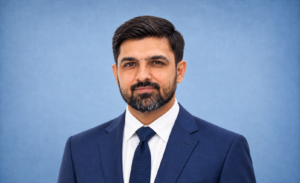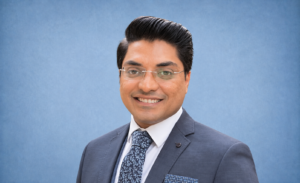
As sustainability and affordability become global priorities, reducing food waste presents an opportunity to create both economic and social value. In this conversation, Rana Muhammad Ans shares how Surplush is transforming surplus food into a scalable marketplace, helping businesses recover value while making quality meals more accessible and environmentally responsible.
Boardroom: What inspired the idea behind Surplush?
Muhammad Ans: The idea came out of first-hand observation, not a classroom exercise. As students in BNU’s Management Sciences programme, we kept seeing the same pattern during our coursework and internships in Lahore’s restaurant industry: kitchens preparing a fixed amount of food each evening while customer demand stayed unpredictable, and the difference between the two being thrown away at closing time, night after night.
That observation sat alongside a much bigger national statistic that made the waste feel indefensible rather than just wasteful: while restaurants were discarding roughly 15-17% of what they prepared, 36% of Pakistan’s population was simultaneously facing moderate to severe food insecurity. Seeing perfectly good, freshly made food go into the bin a few hours before a large share of the country was struggling to afford a proper meal is what turned an observation into a business idea.
Boardroom: What market gap convinced you that food rescue could become a scalable business?
Muhammad Ans: Three things convinced us. First, the sheer size of the opportunity with nobody serving it: Pakistan’s food service sector is estimated at PKR 800 billion, concentrated in Lahore, Karachi and Islamabad, and as of our research there was no digital platform in the country systematically connecting surplus food to price-conscious buyers.
Second, the enabling infrastructure was already in place. JazzCash alone has roughly 35 million registered users, so the mobile-payment backbone a food-rescue marketplace needs already existed — we didn’t have to build trust in digital payments from zero, only trust in the new category we were introducing.
Third, there was global precedent that the model works at scale. Too Good To Go, founded in Denmark in 2015, is now active in 17 countries, has rescued more than 200 million bags, and was valued at USD 1.2 billion in 2022. Olio, Karma and Flashfood have shown similar unit economics work in other markets. Nobody had brought that model to Pakistan yet, which gave us a first-mover position in a market that had already proven itself elsewhere.
Boardroom: How do you balance commercial value with environmental impact?
Muhammad Ans: We treat them as the same transaction rather than as a trade-off. Every rupee earned on Surplush corresponds to a meal that didn’t end up in a landfill and a business that recovered money on food it had already paid to prepare — that’s one of our core values, ‘shared value’: there is no tension between commercial success and social impact on this platform.
That said, we’re deliberate about which one leads in our messaging. Our brand consciously avoids the sustainability register that most food-waste projects use. The primary pitch to consumers is economic — good food at a great price — and the environmental and social impact is something the customer experiences as a benefit after the purchase, not the reason we ask them to buy. We took the same approach with restaurant partners: Surplush is never positioned as a charity or a waste-management service, only as a revenue-recovery tool. We found that leading with money, not guilt, is what actually gets both sides to commit.
Boardroom: What challenges do restaurants face in adopting surplus food solutions?
Muhammad Ans: Our in-person interviews with four pilot partners (Mughal e Azam Marriage Hall, Steamin, Eighty Twenty Burger and Cafe Guftogu) surfaced a fairly consistent set of concerns:
- Reliability of pickup, vendors were unwilling to hold reserved food for long periods, worried about no-shows eating into their evening. This is exactly why our model is prepaid: the customer pays before they collect, which removes that risk entirely.
- Food safety windows, kitchens like Steamin flagged that certain surplus items are only safe to hold for 4-5 hours, so the platform needs strict, enforced pickup windows.
- Perception of reheated or lower-quality food, quick-service partners like Eighty Twenty Burger were wary of being seen as offloading ‘leftovers,’ and wanted clear communication to users that listings are fresh same-day surplus, not reheated food.
- Unique, non-repeatable inventory, event caterers and marriage halls generate large, one-off batches (a wedding menu isn’t repeated the next day), so listings have to go live the same evening.
- Fee structure fatigue, all four partners were unhappy with the high per-order commissions charged by existing food-delivery platforms like Foodpanda, and responded far more positively to a low, predictable listing fee than to a steep transaction cut.
- Discount-stigma / brand concern, some owners worried about publicly associating their business with ‘surplus’ or ‘discounted’ food, which is why we frame every partner conversation around revenue recovery, never charity or waste.
Boardroom: How do you build consumer trust around purchasing surplus food?
Muhammad Ans: Trust is built on three pillars. First, local trust: Surplush only lists restaurants that customers already know and have chosen to visit before, a rescue bag isn’t anonymous food from an unknown source, it’s tonight’s surplus from a business the customer already trusts.
Second, transparency: customers always know which restaurant they’re buying from, the general category of food in the bag, and the exact pickup time and location, the only thing they don’t know in advance is the specific dish, which is the ‘surprise’ element that has worked well in similar markets abroad.
Third, verification and social proof: every approved partner carries our ‘Shield’ trust mark, signalling that the kitchen follows a simple rule, made today, sold today, picked up tonight. On top of that, post-pickup ratings create a visible trail of reviews that reduces the trust barrier for new users, and partner restaurants remain responsible for their own Punjab Food Authority compliance under our partner agreements.
Boardroom: What role does technology play in optimizing your marketplace model?
Muhammad Ans: Technology is what lets us run a two-sided marketplace with a three-person founding team and no physical infrastructure. The platform is a mobile-first web app (React front end on Vercel, Node.js/RESTful API backend, PostgreSQL database) that deliberately skips a native app download, removing the single biggest friction point for first-time users.
On the consumer side, phone-OTP authentication, JazzCash/EasyPaisa/card payment integration, and a live browse page (filterable by area and bag type) take a user from discovery to a paid, coded reservation in under three minutes. On the supply side, a partner dashboard lets restaurants list a bag, set pickup windows, mark orders fulfilled, and receive automated weekly performance reports, all without needing any technical background.
The WhatsApp Business API broadcast is arguably our most important piece of technology commercially: a single 6pm message tells subscribers what’s available that evening, which is what converts passive interest into same-day action rather than relying on people to remember to open a browse page.
Boardroom: How do you measure success beyond revenue and customer growth?
Muhammad Ans: Revenue and registered users are tracked, but the metrics we actually care about most are bags/meals rescued and partner revenue recovered, because those are the numbers that tell us whether the core mission (less food wasted, more affordable food available) is actually happening. Every partner gets a weekly report showing bags sold, revenue recovered, and customer ratings, which doubles as our own measure of whether the marketplace is creating real value on the supply side.
We also track WhatsApp subscriber growth and partner-count growth together, because our competitive advantage is a network-effect flywheel, more live partners make the daily broadcast more valuable, which attracts more subscribers, which attracts more partners. Beyond the six-month pilot, our stated milestone is reaching one million meals rescued by 2028, which we treat as the north-star metric more than any single revenue figure, and our impact aligns directly with UN Sustainable Development Goal 12.3 (halving food waste by 2030).
Boardroom: What opportunities do you see for circular economy startups in Pakistan?
Muhammad Ans: We think Pakistan is genuinely under-served for circular-economy models right now, and food is just the most visible example. A few specific openings stand out from our research:
- A PKR 800 billion food service sector with no digital surplus channel at all, the same gap almost certainly exists in adjacent categories (bakery, produce, retail markdowns).
- A young, urban, digitally literate population that is already comfortable with mobile payments (JazzCash alone has ~35 million registered users) and discount-seeking behaviour, which lowers the adoption barrier for any ‘value-recovery’ business model.
- Segments no one has targeted yet, our own USP is built partly on event catering and wedding halls, a distinctly Pakistani vertical (a single wedding can generate hundreds of surplus servings) that international players like Too Good To Go haven’t had to design for.
- Growing alignment with government and NGO sustainability goals (SDG 12.3), which opens a future path to ESG-linked partnerships and possibly policy support as awareness of food waste grows.
- Economic conditions that make circular models more attractive, not less, inflation increases price sensitivity among consumers even as it raises input costs for businesses, which pushes both sides toward recovery-based models like ours rather than away from them.
Boardroom: What challenges have you faced in changing consumer and business behavior toward food waste?
Muhammad Ans: The single biggest barrier has been unfamiliarity, the concept of buying a ‘mystery’ surplus bag simply doesn’t exist yet in the Pakistani consumer’s mental model, so the market has to be educated from the ground up rather than simply marketed to. That’s part of why our Instagram strategy dedicates its first two weeks purely to food-waste education and founding-story content before we ever show a live deal.
On the supply side, the resistance isn’t about believing in the idea, our vendor interviews found business owners quickly understood and liked the concept, it’s about risk. Restaurant owners need confidence that customers will actually show up (addressed through prepaid reservations) and that payouts will arrive reliably before they’re willing to commit real inventory to a new, unproven platform.
There’s also a subtler behavioural challenge: some restaurants are wary of being publicly associated with ‘discounted’ or ‘surplus’ food, worried it cheapens their brand, which is why our supplier-facing language never uses the words ‘charity’ or ‘waste’ and instead frames every listing as revenue recovery. And more generally, we’re competing against sheer inertia, app fatigue, and the fact that none of the existing substitutes (delivery apps, street food, eating at home) require any behaviour change at all, while Surplush asks people to plan around a 6pm alert and a same-evening pickup window.
Boardroom: What is your long-term vision for Surplush in transforming sustainable food commerce in Pakistan?
Muhammad Ans: Our stated vision is to become the biggest food rescue marketplace in Pakistan within three years, live across Lahore, Karachi and Islamabad, and to rescue one million meals before 2028. The six-month pilot in Lahore’s Gulberg district is deliberately the first, smallest step in that plan, not the plan itself: our post-launch roadmap has Karachi outreach beginning in Month 12 and an Islamabad pilot in Month 18, expansion that is intentionally gated behind proven break-even in Lahore rather than pursued in parallel, so we don’t repeat the over-expansion mistakes that sank other Pakistani startups like Airlift.
Beyond geography, we see the event-catering and wedding-hall vertical, a monthly ‘rescue pass’ subscription tier, and B2B corporate meal packages as the next layers of the business once the core marketplace has proven itself. Longer term, we treat Year 3-5 as the point where Surplush should be evaluated from a position of strength, whether that means continuing to scale independently, a trade sale to an adjacent fintech or delivery platform already active in Pakistan, or acquisition by an international food-rescue brand entering the market.
But underneath all of that, the real long-term goal is to make ‘check what’s rescued near you before you order full price’ a normal, everyday habit in Pakistan’s major cities, turning food rescue from a novel concept into standard food commerce, the way it has already become in much of Europe.