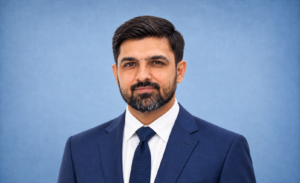
As artificial intelligence reshapes business communication, voice technology is emerging as a more natural and accessible interface between people and machines. In this conversation, Malik Atif shares how Xevoice.ai is developing practical voice-based AI solutions that automate meaningful business functions while supporting local languages and advancing Pakistan’s digital transformation.
Boardroom: What inspired the creation of Xevoice.ai?
Malik Atif: Xevoice.ai was inspired by the rapid transformation taking place through artificial intelligence and automation. We are entering a period where many traditional skills and repetitive business functions will increasingly be automated. I saw an opportunity to build practical voice-based AI solutions that can help businesses adapt to this transformation while improving the way they communicate with customers. Our focus is not simply on creating another AI tool. It is about developing systems that can perform meaningful business functions through natural voice interaction, making technology more accessible, efficient and useful for organisations.
Boardroom: What role does natural conversation play in your product design?
Malik Atif: Natural conversation is central to the product. People are accustomed to communicating through voice, so an effective voice technology should feel as natural as possible rather than sounding robotic or mechanical. Our objective is to develop voice agents that can understand a person’s language, respond appropriately and carry out useful tasks. This requires more than voice generation. It involves integrating language models, voice technology, business logic and external tools into an end-to-end system. For Pakistan, this becomes particularly important because voice technology can be developed around local languages and communication patterns. Supporting Urdu and regional languages such as Punjabi can make AI considerably more accessible to a wider audience.
Boardroom: What opportunities do you see for wise technologies in emerging markets like Pakistan?
Malik Atif: Emerging markets such as Pakistan present significant opportunities for voice based technologies because many businesses still depend heavily on manual communication. Voice AI can help organisations manage customer inquiries, appointments, follow ups and other routine interactions more efficiently. We are initially looking at specific business niches where the technology can deliver a clear and measurable benefit. Healthcare is one important area, particularly dental clinics and general medical clinics. Another potential area is real estate, where businesses regularly deal with inquiries, appointments, site visits and customer follow ups. The opportunity is to start with focused applications rather than trying to serve every industry at once. Once the technology and systems are proven within selected niches, they can be expanded into other markets and business categories.
Boardroom: What is your long-term vision?
Malik Atif: Our long-term vision is to contribute to the digital transformation of businesses in Pakistan by making AI powered communication practical and accessible. We see voice technology becoming an important interface between businesses and their customers. Instead of relying entirely on manual communication, businesses will increasingly be able to automate routine conversations while maintaining a more personal customer experience. For example, in healthcare, a voice system could help manage appointments, communicate with patients and handle routine follow ups, allowing doctors and their teams to concentrate more on patient care. Similar applications can be developed for real estate and other service-based businesses. Ultimately, we want Xevoice.ai to evolve from a voice technology solution into a broader automation platform that integrates intelligent communication directly into business operations. Our ambition is to build this capability in Pakistan and demonstrate that locally developed AI solutions can address real business problems and compete in an increasingly digital global economy.