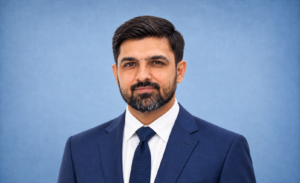
As pet ownership continues to grow, the demand for trusted, professional care has never been greater. In this conversation, Maham Naeem shares how Bennys Pet Lounge is redefining pet hospitality in Pakistan by combining compassion, operational excellence, and unwavering trust to create a safe, nurturing environment for every companion.
Boardroom: What inspired the idea behind Bennys Pet Lounge, and what problem are you trying to solve?
Maham Naeem: Bennys Pet Lounge emerged from a deeply personal experience as a pet owner. Like many pet parents, I often struggled with the anxiety of leaving my pet behind while traveling or managing other commitments. One of the biggest concerns was trust; finding a place where pets would be genuinely cared for, not merely accommodated. The idea behind Bennys Pet Lounge was to create a space that would provide pet owners with complete peace of mind. We wanted to build an environment where pets feel safe, comfortable, and cared for, while owners remain confident that their companions are in responsible hands. For me, this was never purely a business idea. It has always been a passion-driven project rooted in empathy and personal experience.
Boardroom: What makes pet hospitality different from conventional hospitality businesses?
Maham Naeem: Pet hospitality operates on an entirely different emotional scale. Unlike traditional hospitality, we are not simply dealing with customers; we are caring for family members. Pets are emotionally attached to their owners, and owners are equally invested in their pets’ wellbeing. This creates an environment where trust, accountability, and emotional sensitivity become central to operations. There is very little room for error because every pet has unique needs, temperaments, and health conditions. In many ways, this business requires emotional intelligence just as much as operational efficiency.
Boardroom: How did you approach building the infrastructure and standards for Bennys Pet Lounge?
Maham Naeem: We approached the process with extensive research and careful planning. Before launching, we studied international pet boarding models and tried to understand best practices in pet hospitality. Since Pakistan lacks clearly defined industry standards for professional pet boarding, we had to create many systems ourselves. From physical infrastructure to operational procedures, we invested considerable time into designing an environment focused on safety, comfort, and supervision. We also continued improving the model based on practical learning and customer feedback. The process has been highly iterative because animal care demands continuous adaptation.
Boardroom: Trust appears to be central to your model. How do you build confidence among pet owners?
Maham Naeem: Trust is the foundation of everything we do. As pet owners ourselves, we understand the emotional stress involved in leaving pets behind. That is why transparency remains one of our strongest priorities. We provide camera access so owners can check on their pets, maintain regular communication through updates, and stay connected throughout the boarding experience. We also encourage open dialogue because reassurance matters immensely in this category. When pet parents feel informed and involved, their anxiety naturally decreases.
Boardroom: What are some of the biggest misconceptions pet owners have about professional boarding services?
Maham Naeem: One common misconception is that pet boarding is simply about providing food and shelter. In reality, professional pet care is highly demanding. Pets experience emotional stress, separation anxiety, and behavioral changes when placed in unfamiliar environments. Every animal requires personalized attention based on temperament, dietary needs, and emotional comfort. There are also situations where pre-existing health conditions may unexpectedly surface, creating additional responsibility. This is why pet hospitality requires trained handling, structured monitoring, and constant vigilance. It is a high-responsibility service rather than a simple accommodation arrangement.
Boardroom: What are the biggest operational challenges in this industry?
Maham Naeem: The challenges are significant because this is both an emotionally and operationally intensive business. One of the major concerns is workforce management. Staff must be trained not only in handling pets but also in understanding behavior, care standards, and emergency responses. Retention is another challenge because consistency matters immensely in pet care. Owners trust familiar faces, and animals often become comfortable with specific caregivers. Additionally, because this industry involves living beings rather than products, unpredictability is always present. Every day requires adaptability.
Boardroom: Have you faced resistance or skepticism while introducing this concept, particularly in the early stages?
Maham Naeem: Professional pet boarding is still an evolving concept in Pakistan, and there was initial skepticism regarding whether people would trust someone else to care for their pets. We also encountered criticism and misunderstandings, which is expected when introducing a relatively new concept. However, over time, credibility has grown through positive experiences, repeat customers, and word-of-mouth trust. In businesses like ours, reputation ultimately becomes the strongest differentiator.
Boardroom: What key entrepreneurial lessons have you learned through this journey?
Maham Naeem: Patience has been one of the biggest lessons. In the beginning, I was extremely hands-on and emotionally involved in every aspect of the business. Over time, I learned the importance of systems, delegation, and structured processes. I also realized that scaling a service-oriented business requires strong teams, operational discipline, and continuous learning. Entrepreneurship often teaches you to balance emotional passion with strategic decision-making. Most importantly, I learned that meaningful businesses take time to build.
Boardroom: Bennys Pet Lounge appears to be driven by emotion as much as business. How do you balance the two?
Maham Naeem: It is certainly a delicate balance. Because I am personally attached to animals, emotional involvement comes naturally. When a pet misses its owner or experiences discomfort, you genuinely feel that responsibility. However, over time, I have learned the importance of stepping back and approaching situations professionally. Compassion is essential, but structure and systems are equally important when running a scalable operation. The goal is to care deeply while remaining operationally strong.
Boardroom: What is your long-term vision for Bennys Pet Lounge?
Maham Naeem: Our long-term vision is to establish Bennys Pet Lounge as a trusted benchmark for professional pet hospitality in Pakistan. We want to continue raising care standards while gradually expanding into additional cities and services. Beyond boarding, there is immense potential in pet wellness, grooming, enrichment, and specialized care experiences. Ultimately, we want pet owners to associate Bennys Pet Lounge with trust, safety, and peace of mind.
Boardroom: What larger purpose do you want Bennys Pet Lounge to represent?
Maham Naeem: At its heart, Bennys Pet Lounge represents responsible pet parenting.
Owning a pet is a long-term commitment, and animals deserve environments where they are treated with care, patience, and dignity. We want to contribute toward building a stronger culture of responsible pet care in Pakistan. If pet owners can travel, work, or manage life responsibilities knowing their companions are genuinely cared for, then we believe we are fulfilling our purpose.