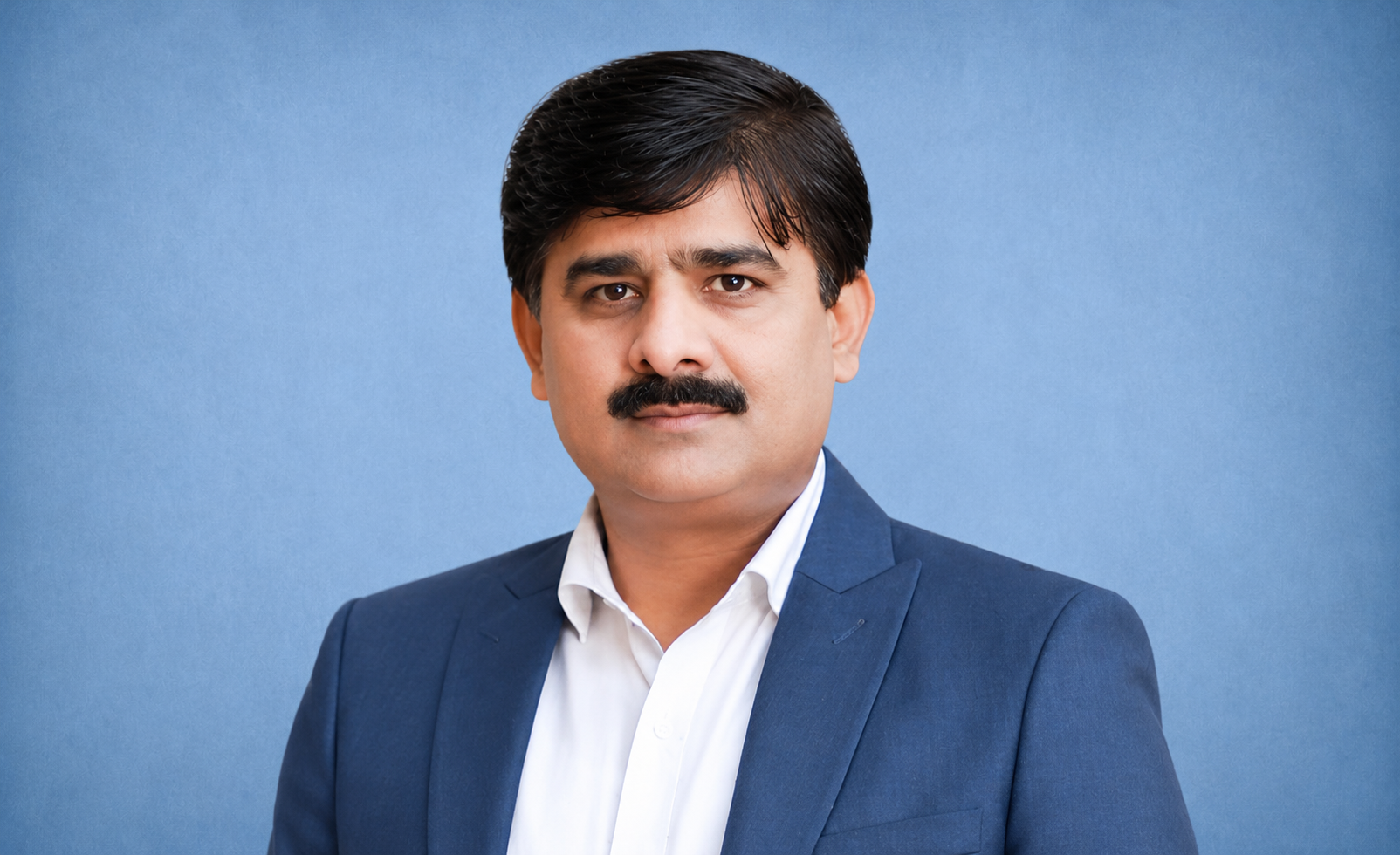
As luxury menswear evolves, discerning customers increasingly value individuality, craftsmanship, and the distinction of a perfectly tailored suit. In this conversation, Iftikhar Afzal shares how Uomo Attire is bringing Italian suiting traditions into bespoke menswear, combining imported fabrics, technical expertise, and personalized design to position Pakistani craftsmanship in international markets.
Boardroom: What inspired the creation of Uomo Attire, and how did your interest in Italian fabrics evolve into a specialized menswear business?
Iftikhar Afzal: My journey began with an appreciation for Italian fabrics, particularly their look, feel, texture and presentation. I became increasingly interested in understanding the fabrics themselves, their quality and the craftsmanship behind them. I read extensively, explored international resources and began learning from people with experience in the field. One of the most important things I discovered was that identifying a fabric’s true quality and value requires more than theoretical knowledge. The same type of fabric can have vastly different prices, ranging from a few thousand rupees to several hundred thousand rupees per meter. Distinguishing those differences requires practical experience and a trained eye. Over time, I developed the ability to recognize different Italian suiting fabrics through their characteristics and quality. My specialization is specifically in imported Italian suiting fabrics. This focus has shaped the identity and direction of Uomo Attire.
Boardroom: What is the philosophy behind the name Uomo Attire, and how does it reflect the brand’s identity?
Iftikhar Afzal: The name draws inspiration from Italian language and fashion. Uomo means men in Italian, while attire refers to clothing. Together, the name represents men’s fine clothing. Italian influence is also central to our approach to menswear. Our specialization is Italian suiting, with particular attention to the structure, construction and finishing of a suit. Even details such as the lapel are important. In Italian tailoring, the lapel is expected to have a natural roll rather than simply lying flat. These details distinguish refined tailoring from ordinary garment construction.
Boardroom: How do you balance traditional craftsmanship with contemporary trends in men’s fashion?
Iftikhar Afzal: There are two broad preferences in menswear. One is traditional dressing, particularly the styles commonly chosen for weddings and formal occasions. The other is contemporary dressing, which reflects evolving international fashion trends.
Both have their place. A considerable proportion of customers still prefer traditional designs, while another segment wants something more contemporary and distinctive. Our responsibility is to understand both preferences and guide customers accordingly. When a client approaches us, we explain the traditional options as well as contemporary possibilities. We then recommend a direction based on the individual’s personality, the nature of the event, its theme and the client’s requirements. The objective is not simply to follow a trend, but to create an appearance that genuinely suits the person wearing it.
Boardroom: What distinguishes Uomo Attire from conventional menswear brands, particularly in its approach to customization and bespoke tailoring?
Iftikhar Afzal: Uomo Attire does not operate as a ready to wear brand. We do not offer a collection of finished suits for customers to purchase directly. Every garment is designed and made according to the client’s requirements, personality and occasion. Our specialization is customized suiting, including three-piece suits, tuxedos, wedding suits, business suits and other forms of luxury menswear.
I believe the distinction lies in the depth of personalization. A suit should not simply fit a standard size. It should account for the individual’s proportions, posture, shoulder structure, preferences and the finer details of appearance. These are the areas where experience and technical expertise matter considerably. We also take pride in the quality of our stitching, fitting and finishing. Our focus has always been to deliver a level of customized craftsmanship that distinguishes us in the market.
Boardroom: In a luxury market increasingly dominated by ready to wear collections, why do you believe personalization and bespoke tailoring remain important?
Iftikhar Afzal: Ready to wear has become popular largely because of convenience. Customers can select a suit, make minor alterations and purchase it without going through the entire customization process. However, the demand for personalized clothing has also grown as people have become more aware of their individual preferences and international fashion trends. Customization allows a client to achieve something that may not be available in standard collections. Fashion evolves continuously, and customers sometimes want a particular trouser shape, cut, lapel or design that conventional retail brands cannot provide.
There is also a customer segment that understands the value of properly tailored clothing and appreciates the difference in fabric, construction and fit. For such clients, personalization is not an unnecessary luxury. It is an essential part of the experience. Modern machinery has also made the process more efficient. Work that once required several hours can now be completed more quickly through improved equipment and techniques. This has helped reduce some of the time constraints traditionally associated with bespoke tailoring.
Boardroom: Customization requires close collaboration between the tailor and the client. How do you manage differences in expectations and ensure that the final garment reflects the client’s preferences?
Iftikhar Afzal: Communication is essential. Sometimes we develop a design around an agreed color, fabric and theme, but during the process we may identify an opportunity to improve the outcome. Rather than making unilateral decisions, we discuss the alternatives with the client and seek approval before proceeding. One of the advantages of customization is precisely this flexibility. We can recommend a different color, suggest a more suitable option or explain why a particular choice may not complement the client’s appearance.
Skin tone, personal preference and the nature of the occasion all influence these decisions. For example, people with different complexions may have very different color preferences, and a shade that works well for one individual may not be the right choice for another. Our role is to provide professional guidance while respecting the client’s ownership of the final decision.
Boardroom: What have been the major challenges in taking a specialized Pakistani tailoring business to international markets?
Iftikhar Afzal: One of the biggest challenges has been international payments and the processes involved in receiving payments from customers abroad. International transactions require appropriate payment gateways, banking arrangements and compliance with relevant regulations. Having a company presence in the United States has helped us address some of these requirements.
Beyond payments, international expansion demands consistency in quality and service. Customers purchasing from abroad expect the same level of craftsmanship and attention to detail that they would receive from a reputable tailoring establishment in their own country. Fortunately, customers who understand imported Italian fabrics are generally familiar with their quality and market value. Their discussions tend to focus more on stitching, fitting and finishing than on negotiating the fabric price.
We have also developed a remote customization process. Customers can place an order through our website, participate in video consultations, provide their measurements and discuss their requirements with our team. Once the garment is ready, we present it to the client through a video call before delivery. We also incorporate an element of exclusivity by placing the client’s name inside the suit, reinforcing the fact that the garment has been individually made for that person.
Boardroom: What potential do you see for Pakistani bespoke tailoring and craftsmanship in international markets?
Iftikhar Afzal: Pakistan has considerable potential in this field, particularly because of the difference in labour costs between Pakistan and developed markets. The price of internationally sourced fabrics may be relatively similar across countries, but the cost of skilled tailoring can vary significantly. This creates an opportunity for Pakistani businesses to offer high-quality customized garments to international customers at competitive prices.
However, cost alone cannot be the basis of competition. The quality of fabric, technical expertise, stitching, fitting and finishing must meet international expectations. Customers who understand fine tailoring are discerning. They recognize the difference between an ordinary suit and one made with quality materials and proper craftsmanship. I believe Pakistani tailoring businesses can secure a stronger position internationally if they invest in expertise, maintain consistent standards and develop reliable ways to serve customers across borders.
Boardroom: Why have you chosen to remain focused on specialized suiting rather than diversifying into accessories and other menswear categories?
Iftikhar Afzal: Several people have suggested that we introduce additional categories such as kurtas, shoes, belts and perfumes. However, my specialization is suiting, and I prefer to concentrate on what we understand best. Our core areas include three-piece suits, tuxedos, wedding suits, business suits and luxury suiting. I believe that building expertise in a specialized field is more valuable than expanding into categories simply because they are commercially attractive.
My visits to Italy and other international markets have also strengthened my confidence in the quality of our work. I have explored established brands and examined their fabrics, stitching and finishing. Those experiences have reinforced my belief that our craftsmanship can compete at a high level.
Boardroom: What is your long-term vision for Uomo Attire, particularly in view of the specialized expertise required to maintain bespoke tailoring standards?
Iftikhar Afzal: Our ambition is to strengthen Uomo Attire as a specialized name in customized luxury menswear. We have received enquiries about opening additional branches and offering franchises, but bespoke tailoring is an area that requires considerable expertise. It is not simply a matter of replicating a design or opening another outlet. A skilled tailor must understand individual body proportions, shoulder structures, posture and numerous technical details that determine how a garment fits. Some people have a lower left shoulder, others a lower right shoulder, while differences in the back neck and shoulder structure also affect the final construction.
These details cannot be mastered through a basic franchise arrangement. The expertise is as important as the garment itself. Therefore, expansion must not compromise the standards that define the brand. Our focus remains on delivering individually tailored garments, strengthening our international customer base and preserving the craftsmanship that distinguishes Uomo Attire.