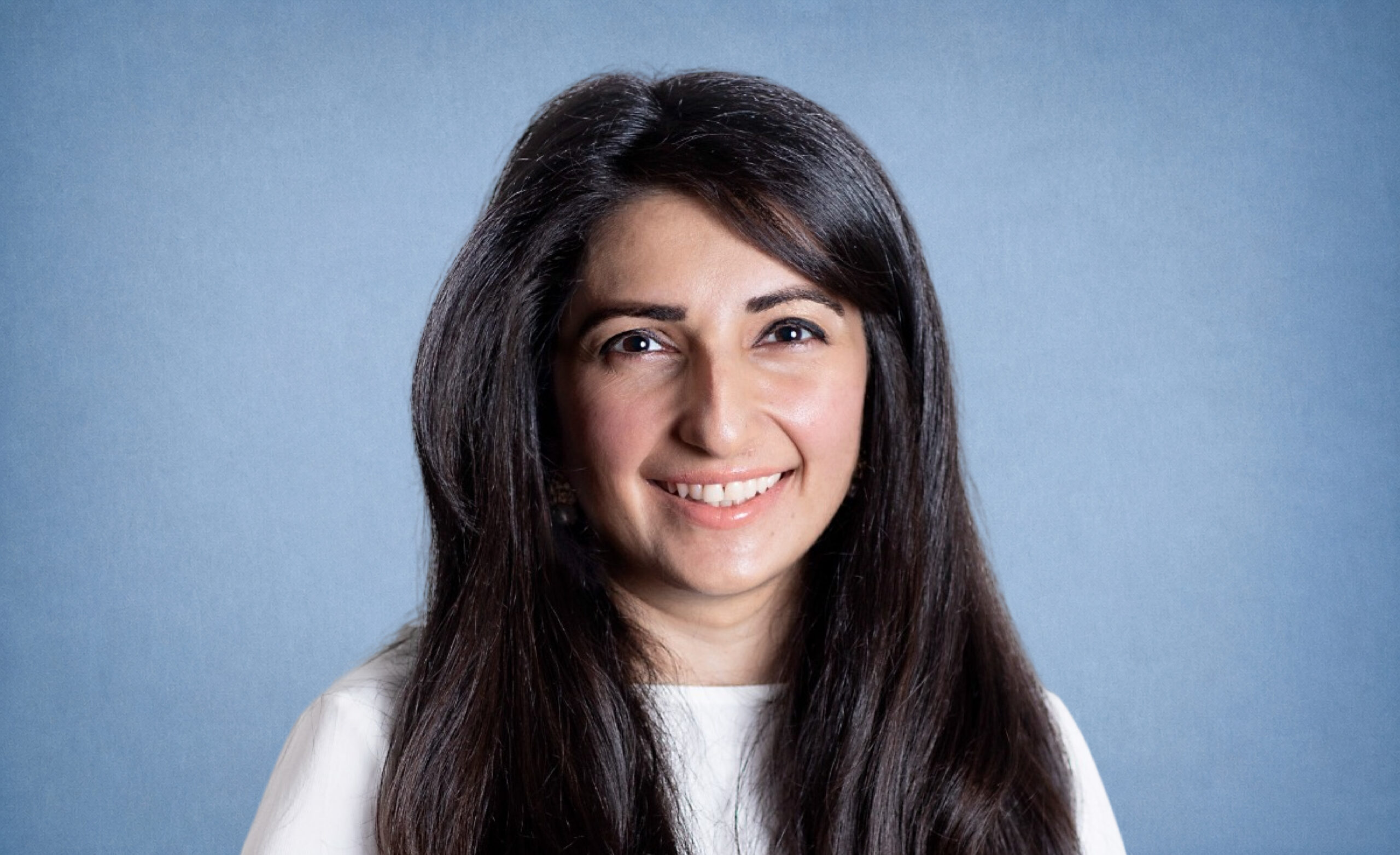
As technology reshapes every industry, the future of education depends on preparing young minds with skills that go beyond traditional classrooms. In this conversation, Sadaf Rehman shares how Code School is redefining learning by making coding, creativity, and computational thinking accessible to every child, regardless of background.
Boardroom: What inspired the creation of Code School, and what problem were you trying to solve?
Sadaf Rehman: Code School was born from a simple but urgent realization: while the world is rapidly advancing through artificial intelligence and digital transformation, education systems are still largely preparing children for a world that no longer exists. Today, millions of students complete years of formal education without developing meaningful digital skills. Yet coding and computational thinking are increasingly becoming foundational capabilities across almost every profession. The inspiration behind Code School came from observing this disconnect and asking a fundamental question: if digital skills are becoming a basic literacy for the future, why are we still treating them as optional? What started as an experiment during the pandemic gradually evolved into a mission to prepare children to participate meaningfully in the digital economy.
Boardroom: Why do you believe coding should be viewed as a core literacy rather than a technical specialization?
Sadaf Rehman: Because coding is no longer about becoming a software engineer. Just as reading and writing became universal skills, understanding technology is becoming essential across professions. Whether someone becomes a doctor, architect, mechanic, entrepreneur, designer, or educator, digital systems will increasingly shape how they work. However, coding should not be reduced to memorizing syntax or learning isolated commands. At its best, coding develops structured thinking, creativity, problem solving, and the ability to translate ideas into solutions. For us, coding is a language of thinking.
Boardroom: How does Code School approach learning differently from conventional education models?
Sadaf Rehman: Traditional education often rewards memorization. Our approach focuses on creation. Children do not learn effectively by repeating instructions or memorizing concepts in isolation. They learn by building, experimenting, solving problems, and seeing outcomes. At Code School, we use project-based learning where students create games, interactive experiences, and technology-driven projects. Instead of teaching abstract concepts first, we introduce concepts through application. When learning becomes meaningful, engagement becomes natural.
Boardroom: You often connect coding with creativity. How do these ideas complement each other?
Sadaf Rehman: Creativity and coding are not separate disciplines. Technology simply becomes another medium for expression. Just as previous generations expressed creativity through paper, writing, and physical tools, today’s generation increasingly expresses itself through digital environments. We regularly see children designing games, creating interactive stories, and developing their own digital experiences. At the same time, coding develops another form of creativity: structured problem solving the ability to break complex challenges into manageable solutions. That combination makes digital learning particularly powerful.
Boardroom: How should education evolve in an AI-driven world?
Sadaf Rehman: Artificial intelligence should be treated as a tool, not a substitute for thinking. AI can accelerate outcomes and increase efficiency, but it cannot replace foundational understanding. Students still need to understand concepts, ask better questions, evaluate outputs, and think independently. Our concern is not whether children will use AI, they inevitably will. The real question is whether they will become passive users of technology or active creators who understand how to use technology to solve meaningful problems. Education must shift from producing workers to developing thinkers.
Boardroom: You have spoken about education systems changing too slowly. What needs to change?
Sadaf Rehman: The biggest shift must happen in how we teach, not simply what we teach. Many classrooms still operate using structures designed for a different economic era. Meanwhile, the world outside schools has changed dramatically. Subjects alone do not create critical thinking. Methodology does. If students are encouraged to question, experiment, collaborate, and solve problems, they naturally develop capabilities such as confidence, creativity, and analytical thinking. The future belongs to education models that prioritize thinking over memorization.
Boardroom: What has been the response from parents and schools to technology-led learning?
Sadaf Rehman: Initially, there was uncertainty. Parents often viewed coding as an optional extracurricular activity rather than an essential future skill. Schools also struggled to understand how digital literacy should be introduced meaningfully. Over time, that mindset has started to shift. As awareness around future skills has increased and curriculum reforms emerged, schools and parents have become more intentional about integrating technology into learning pathways. The conversation is gradually moving from whether children should learn coding to how they should learn it well.
Boardroom: How do you make digital learning accessible in resource-constrained environments?
Sadaf Rehman: Accessibility has always been central to our model. Many people assume meaningful technology education requires expensive infrastructure, but our experience suggests otherwise. We focus on supporting teachers with curriculum, tools, structured lesson plans, and practical teaching methods rather than placing screens directly in children’s hands. Technology should empower educators, not replace them. Our goal is to make high-quality coding education practical even in environments with limited resources.
Boardroom: What lessons have you learned while scaling Code School?
Sadaf Rehman: One of the most powerful lessons has been that talent is universal, but opportunity is not. Children from all backgrounds demonstrate the same potential when given the right environment and support. We have consistently seen students thrive when expectations are raised and learning becomes engaging and relevant. The challenge is rarely capability. More often, it is access, exposure, and belief.
Boardroom: What role should Pakistan play in the future digital economy?
Sadaf Rehman: Pakistan has an extraordinary opportunity. We have a young population and a generation growing up during a major technological transition. If we invest early in digital literacy, problem solving, and technology education, we can become builders rather than consumers of innovation. But this requires long-term thinking. Digital capability should become part of national competitiveness rather than remain an optional educational layer.
Boardroom: What is your long-term vision for Code School?
Sadaf Rehman: Our long-term vision is to become a scalable blueprint for how coding and digital literacy can be taught across resource-constrained environments. We want to empower teachers, enable schools, and help students build confidence in technology from an early age. While Pakistan remains our immediate focus, the model is designed to be adaptable across regions facing similar educational challenges. Ultimately, our goal is not simply to teach children how to code. It is to help build a generation that knows how to think, create, and participate confidently in the future.
Boardroom: What larger message would you like Code School to represent?
Sadaf Rehman: We want Code School to represent possibility. Children should not be limited by geography, resources, or outdated assumptions about education. Every child deserves the opportunity to become a creator, not merely a consumer, of technology. If education can unlock that mindset, then we believe meaningful change becomes possible.