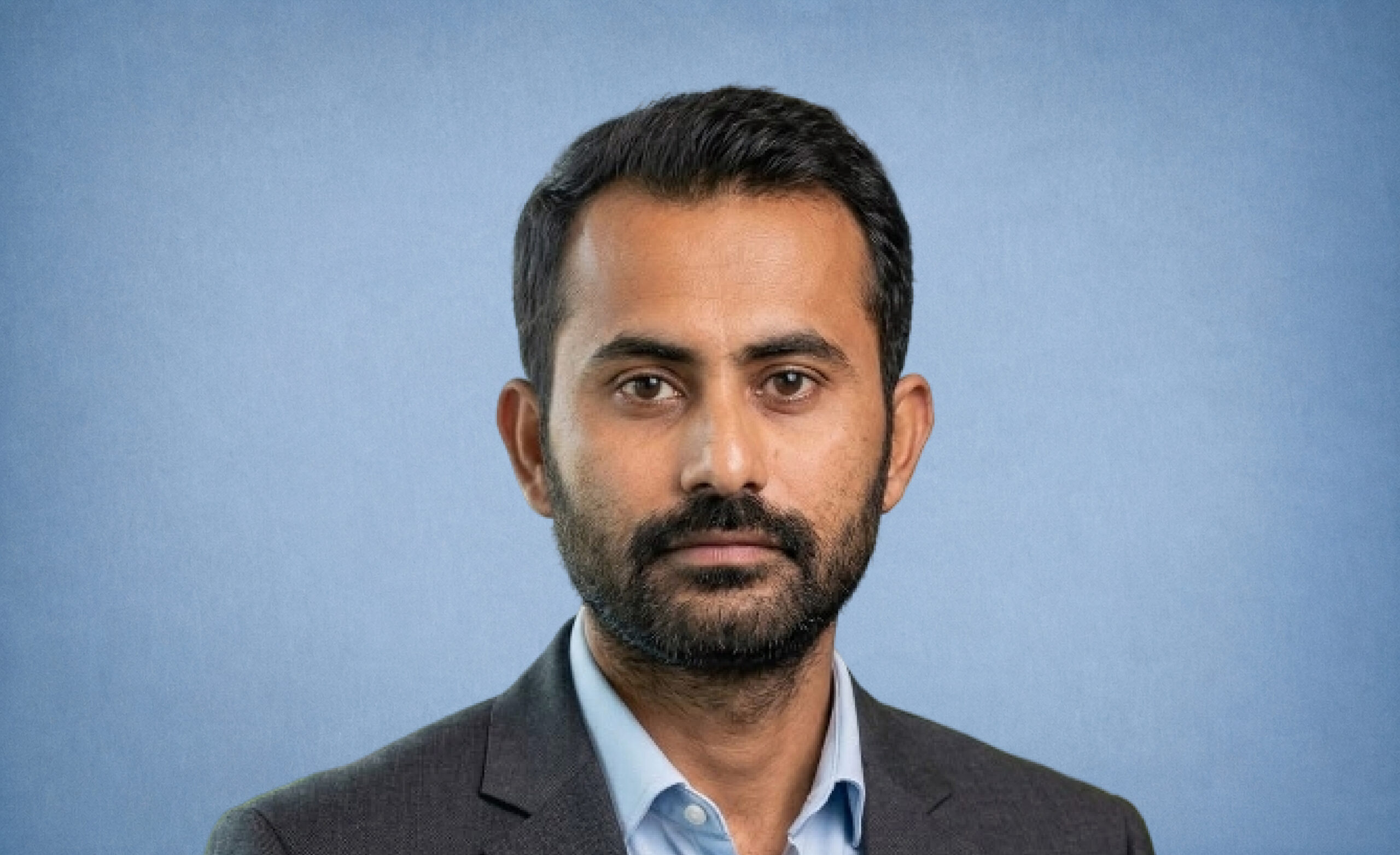
As businesses outgrow fragmented software stacks, the next frontier is moving from connected tools to unified operating environments. In this conversation, Farhan Badar shares how SysOps is building an AI-native platform where humans and intelligent agents operate from shared data, transforming sales, marketing, support, and business growth into one continuous ecosystem.
Boardroom: What inspired the creation of SysOps?
Farhan Badar:Mid-market and growing enterprises run on 10–15 stitched-together tools, a CRM, a marketing suite, a helpdesk, a scheduler, a social tool, a calling tool, each with its own data silo. AI agents can only be as useful as the context they see, and fragmented stacks starve them. SysOps exists because we believe the next generation of business software isn’t a smarter point tool, it’s a unified operating layer where agents and humans work off the same data.
Boardroom: What challenges do mid-market businesses face with existing software platforms?
Farhan Badar: Three, mainly: tool sprawl (integrations that break and eat engineering time), cost stacking (paying enterprise prices for 20% of each platform’s features), and AI bolt-ons that don’t share context across the stack. The result is teams doing manual handoffs between tools that should already be talking to each other.
Boardroom: How does SysOps redefine the modern B2B operating stack?
Farhan Badar: By collapsing sales, marketing, customer support, social, and voice into a single platform on a shared customer graph. A support conversation can trigger a nurture sequence. A closed deal updates the content calendar. The agents don’t “integrate”, they operate natively across every module because it’s one system.
Boardroom: What advantages does an AI-native platform offer over AI-enabled software?
Farhan Badar: AI-enabled is a chatbot bolted onto a legacy schema. AI-native means the data model, workflows, and permissions are designed assuming an agent is a first-class user, it reads and writes directly, carries context across modules, and doesn’t have to scrape its own UI to act. That’s the difference between an assistant that suggests things and an operator that gets them done.
Boardroom: How do you ensure a unified customer experience across every business function?
Farhan Badar: One customer identity across every channel, email, WhatsApp, Meta, LinkedIn, calls, support tickets, campaigns. Any human or AI agent touching that customer sees the full history and current state, so the conversation feels continuous regardless of who or what is on the other side.
Boardroom: What has been the biggest challenge in replacing multiple enterprise tools with one platform?
Farhan Badar: The breadth vs. depth trade-off. Each incumbent has a decade of feature depth in its niche. Our approach: cover the 80% of workflows that matter deeply, keep the platform open for edge-case integrations, and use AI agents to fill gaps that previously justified buying another specialized tool.
Boardroom: How do AI agents reshape sales, marketing, and customer support workflows?
Farhan Badar: Sales gets outbound AI callers that qualify leads and conversational reps that run discovery. Marketing gets brand-aware content generation and campaign orchestration at scale. Support gets AI agents that resolve tier-1 tickets with full customer context and escalate cleanly when needed. The common thread: humans move up the value stack, agents handle the volume.
Boardroom: How do you balance enterprise-grade capabilities with accessible pricing?
Farhan Badar: Modern architecture. A multi-tenant, event-driven, AI-first platform has a fundamentally lower marginal cost than legacy monoliths carrying 20 years of technical debt. That efficiency lets us price at $39–$169/month per workspace instead of $150–$300 per seat, without cutting capability.
Boardroom: What trends will define the next generation of B2B software platforms?
Farhan Badar: Agents treated as users, not features. Consolidation winning over specialization as switching costs fall. Voice becoming a first-class channel alongside chat and email. Outcome-based pricing replacing per-seat models. And vertical intelligence layered on horizontal platforms rather than the reverse.
Boardroom: What is your long-term vision for SysOps as the operating system for business growth?
Farhan Badar: Every customer interaction, every content asset, every workflow, every agent, running on one platform. SysOps becomes the layer businesses run on the way they used to run on Windows: not a tool they open, but the environment their operations live in.